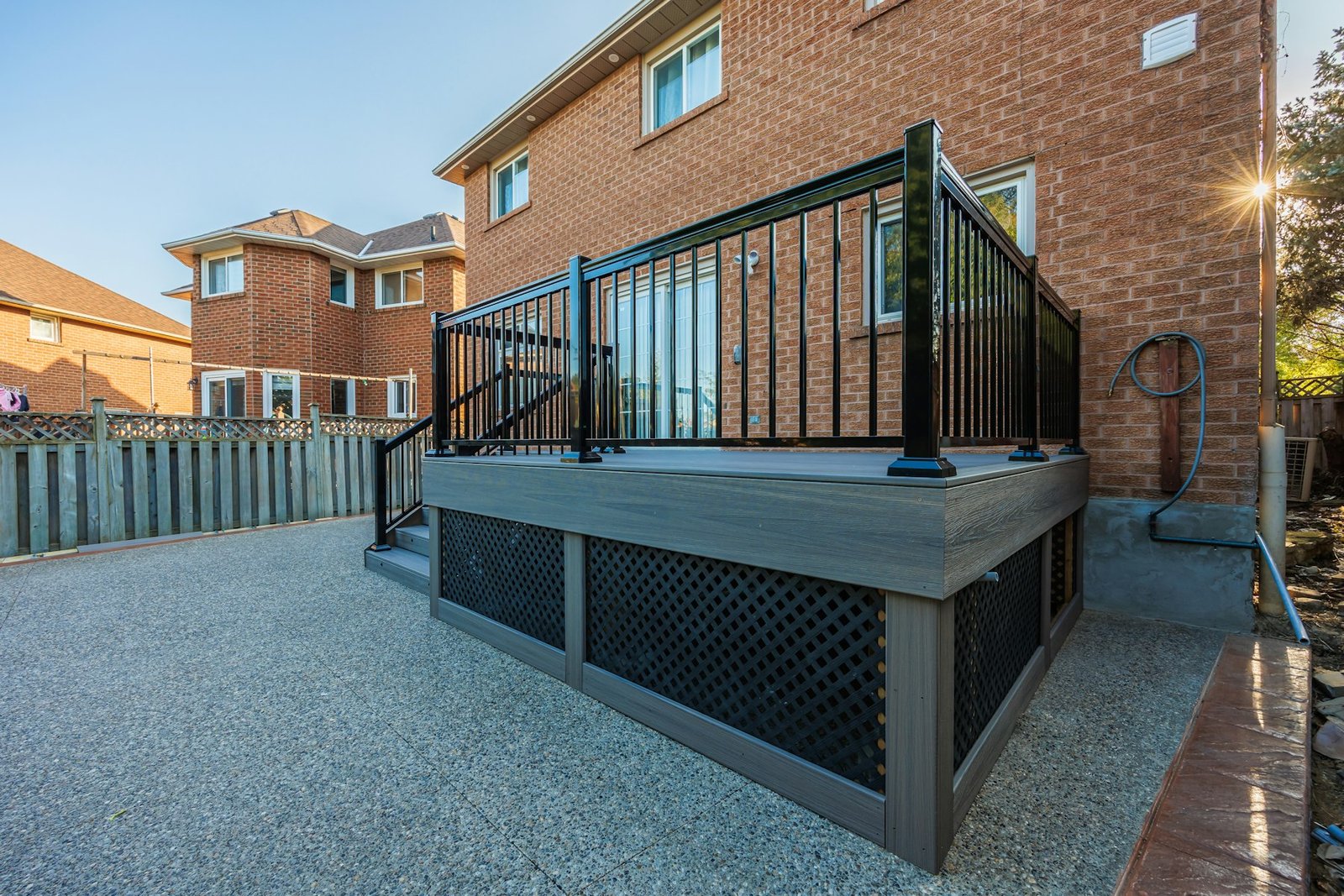
Herriman and the south Salt Lake Valley
Deck Railing Installation in Herriman, Utah
Guards in wood, aluminium, cable and glass — anchored into real blocking rather than notched around the rim joist. The guard is the part of a deck that gets tested by a person’s body weight, and it is the part that most often was not built for it.
Why guards fail
A guard is a structural element, not trim
Code asks a residential guard to resist a 200-pound concentrated load applied at the top rail in any direction. That is a person falling against it, and it is a lot more force than the post connection on many older decks was ever built to take.
The classic failure around here is a four-by-four post notched around the rim joist and held with two lag screws. The notch removes most of the post’s cross-section exactly where the bending force is highest, and the lags work their way out of end grain over time. It looks solid on day one and it is loose by year eight.
Done properly, the post bolts through solid blocking with hardware designed for the job, and the load path runs into the frame rather than into two screws. That is the difference between a guard and a handrail-shaped decoration.
- Guards required wherever the walking surface is more than 30 inches above the ground
- Top of guard at 36 inches minimum on a residential deck; stair handrails sit lower, between 34 and 38 inches
- Baluster spacing tight enough that a 4-inch sphere cannot pass through, checked at the widest gap
- Posts through-bolted into blocking, never notched and lagged to the rim
Materials
What we install
The infill is mostly an appearance and budget decision. The post connection underneath it is the same standard whichever one you pick.
Wood, and wood with metal
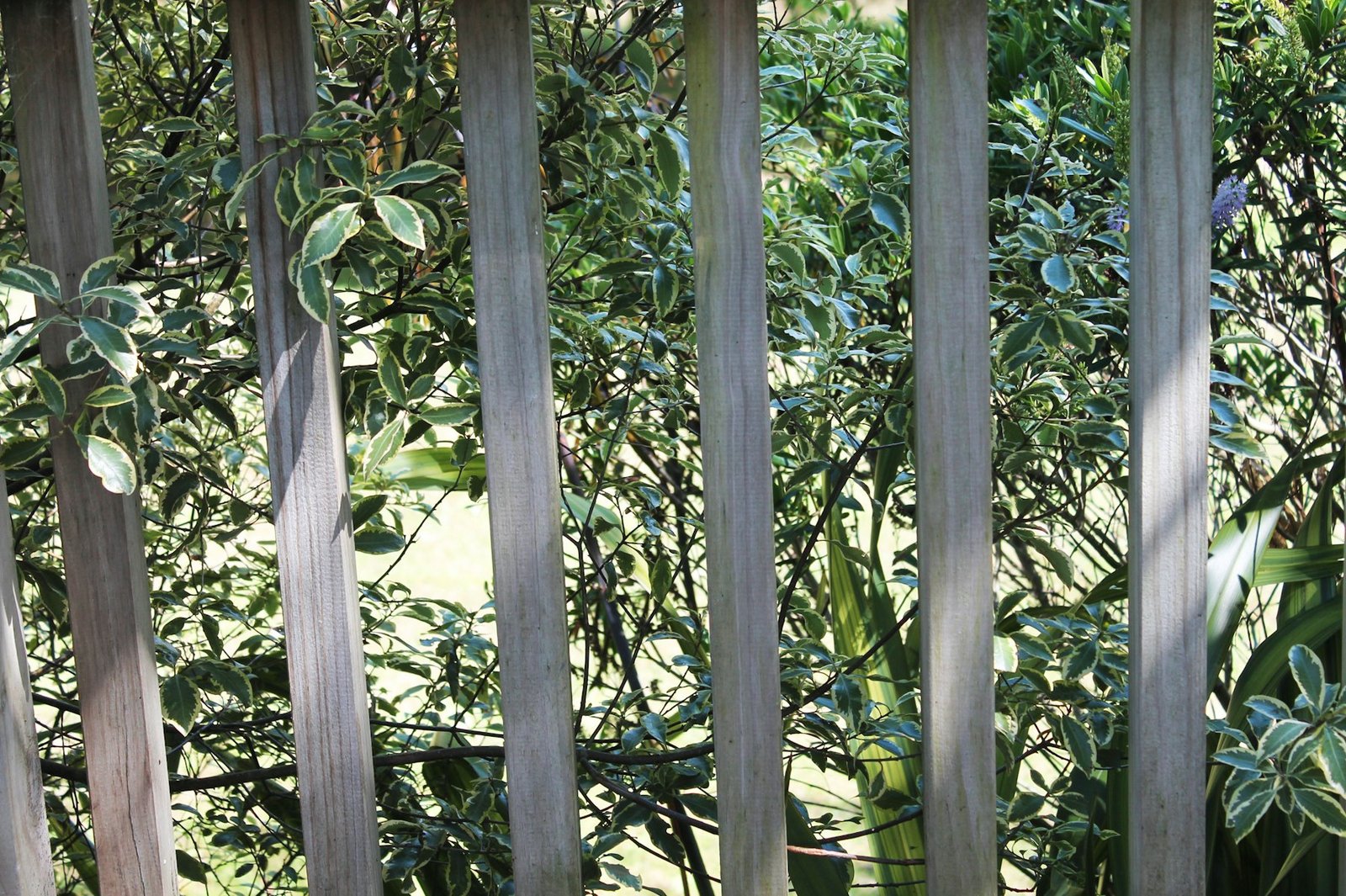
Cedar or treated posts and rails, with either wood balusters or powder-coated aluminium ones. The metal-baluster version is the most common upgrade we do, because it keeps the timber look and cuts the maintenance roughly in half.
Aluminium and cable
Pre-finished aluminium systems that need essentially nothing, and stainless cable for views. Cable puts real tension into the end posts — often several hundred pounds across a run — so those posts get specified and blocked for it rather than treated as ordinary.
Glass panel
Framed or spigot-mounted glass where the view is the whole point. Heavier and more exposed to wind loading than any other option, so posts, spacing and panel size all get worked out before anything is ordered.
Process
How a railing job runs
Shorter than a deck build, and the outcome depends almost entirely on what we find when the first post comes off.
Assess the existing frame
We take a post off and look. If the rim joist is sound and blocking can be added from below, everything after that is straightforward. If the rim is soft, that becomes the job first.
Choose the system
Look, budget and maintenance. Also sightlines — thick timber balusters block more of a view than most people expect once they are actually in place.
Confirm heights and spacing
Guard height, stair handrail height, and infill spacing measured against what an inspector will actually check, including at the widest point of a sloped run.
Blocking and posts
Blocking installed between joists wherever a post lands, then posts through-bolted. This is the part that takes the time and the part that decides whether the guard is any good.
Rails and infill
Top and bottom rails, then balusters, panels or cable. Cable runs get tensioned progressively rather than one line at a time, so the end posts are not pulled out of plumb.
Stairs and finish
Stair guard and a graspable handrail where code requires one, then finish work. On stairs the handrail profile matters — it has to be something a hand can actually close around.
Choosing infill
What each material is like to live with
Wood balusters are the cheapest and the most maintenance. They are also the most visually solid, which is fine facing a fence and frustrating facing a view.
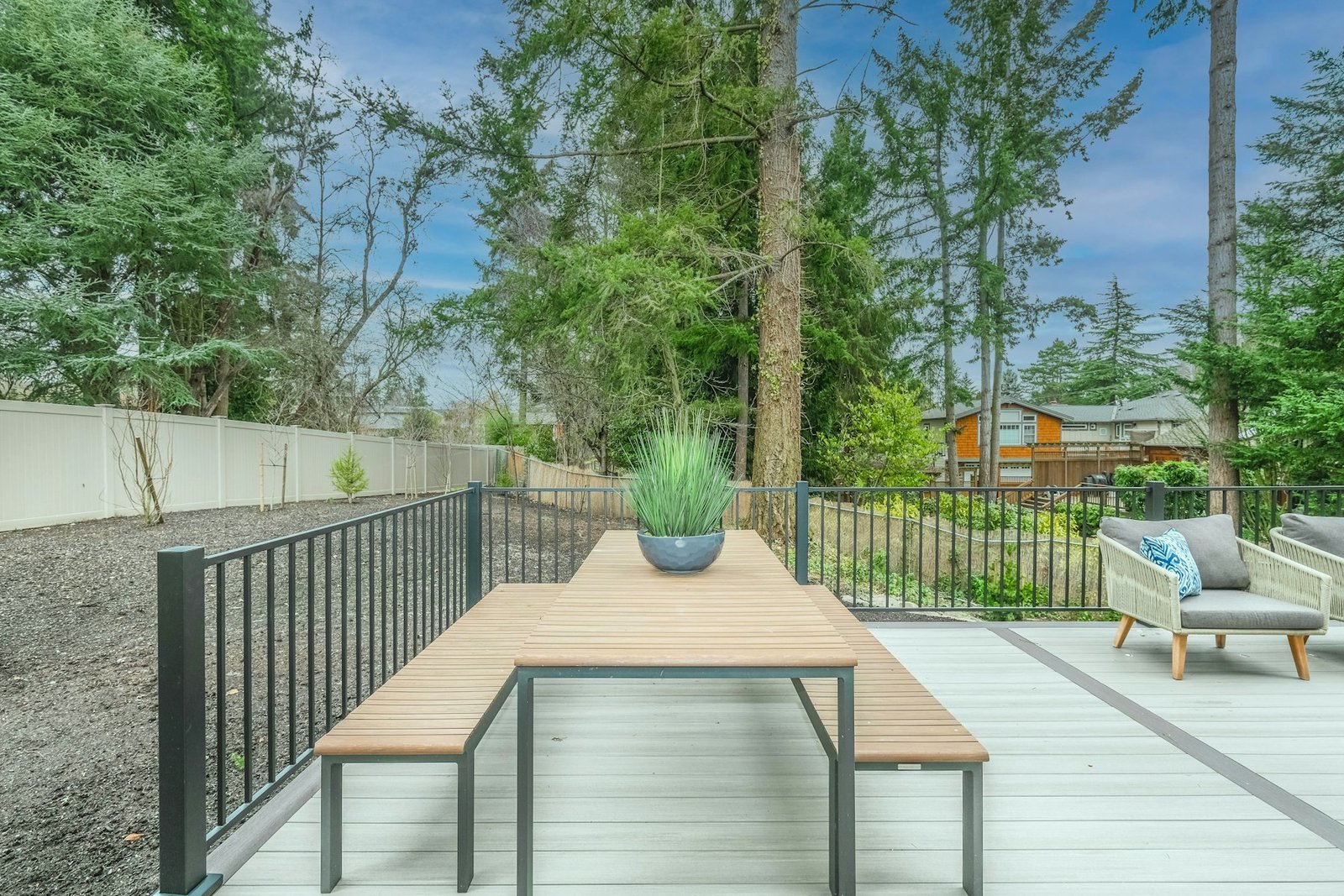
Aluminium balusters are the middle ground most people land on: slimmer, no refinishing, and they suit both timber and composite decks.
Cable nearly disappears at a distance and needs occasional re-tensioning, particularly in its first year. Glass gives the clearest view of all and shows every fingerprint, raindrop and dust storm — and along the Wasatch Front, spring dust is a real thing. Both are premium options, and both need the frame engineered for their loads.
- Facing a view, thinner infill is worth paying for — cable or slim aluminium
- Facing a fence or a neighbour, wood or aluminium balusters make more sense
- Cable needs re-tensioning, especially in its first year, and end posts need sizing for the pull
- Glass needs cleaning far more often than people expect at this end of the valley
Plan the cost
Priced by the foot, including what the posts need
Wood, composite, metal, cable or glass — and the question that decides whether this is a simple job: how the existing posts are fixed to the frame.
Guard feels loose when you lean on it?
That is worth acting on rather than living with. Send a photo of how the posts attach to the deck frame and we can usually tell you what is going on.
Questions
Railing questions
How high does a deck railing have to be?
On a residential deck, guards are required where the walking surface is more than 30 inches above grade, and the guard has to be at least 36 inches high. Stair handrails are different — they sit between 34 and 38 inches above the stair nosings. Cities adopt and can amend these, so we confirm the current numbers with yours rather than working from memory.
What is the gap rule for balusters?
A 4-inch sphere must not pass through anywhere in the guard. Inspectors check it with an actual sphere, and the place it most often fails is at the bottom of a sloped stair run, where the geometry opens the gap up.
Can I add a railing to an existing deck?
Usually yes, and it is one of the more satisfying upgrades because the visual change is dramatic for the money. The condition is the frame: posts need solid blocking and a sound rim joist to bolt into. We check that first, because it decides whether this is a railing job or a frame job.
Is cable railing a lot of maintenance?
Not much day to day — an occasional wipe and a check on tension. The thing to know is that cable stretches, most of it in the first year, so expect to re-tension it once after installation. Systems with adjustable fittings at one end make that a ten-minute job.
Will a new railing match my old deck boards?
Not exactly, and it is better to plan around that than to fight it. A common approach is aluminium or a painted guard in a deliberately different colour, so it reads as a designed contrast rather than a failed match.
Do I need a handrail as well as a guard on the stairs?
Generally yes, once there are four or more risers. A guard stops you falling off the side; a handrail is the thing you actually hold, and it has to be a shape your hand can close around. A wide flat top rail does not qualify on its own.
Related work
Other things we do
Railing work often comes out of one of these, or turns into one when the frame gets a proper look.
Deck Installation
New decks laid out, footed and framed for your lot — from post holes to the last board.
See what’s involvedDeck Repair
Targeted work on rot, springy boards, failing ledgers and rails that move when you lean on them.
See what’s involvedDeck Replacement
Tear-out and rebuild when the frame is past saving, usually on the same footprint.
See what’s involvedGet the guard sorted
Send the form with a photo of how your posts attach to the deck. We will tell you whether it is a railing job or something bigger.
Request a Quote
Tell us about your deck project below, including rough size, materials and photos if you have them, and we will follow up to set up a free estimate.