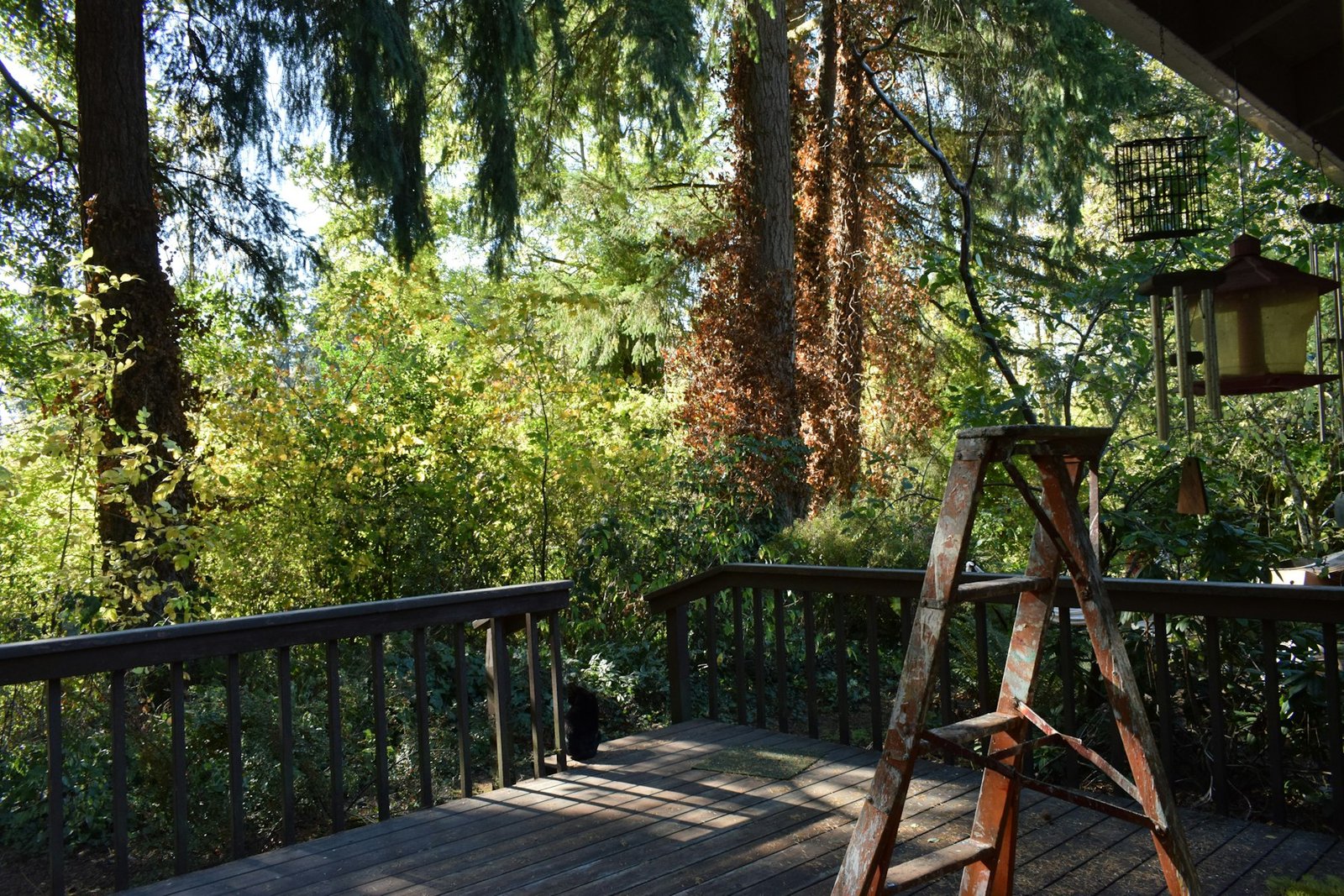
Herriman and the south Salt Lake Valley
Deck Replacement in Herriman, Utah
Tear-out and rebuild when the frame has gone past saving. Usually on the same footprint — though replacement is the one moment in a deck’s life when changing the shape costs almost nothing extra.
What makes it different
Replacement is a demolition job with a deck on the end
The building half is the same work as any new deck. What makes replacement its own job is everything that comes first: getting the old structure off the house without wrecking the siding, finding out what the ledger has been doing to the wall behind it, and moving several tons of old treated lumber off the property.
Old decks also hide their own history. Footings that were never actually poured. A beam bearing on stacked cinder blocks. A ledger lagged into stucco with nothing solid behind it. We price for finding one or two of those, because on a twenty-year-old deck there usually are one or two.
There is a real upside. While the old frame is off, the wall is open. Any rot behind the ledger gets found and fixed at that moment, for a fraction of what it costs once a brand-new deck is sitting over the top of it.
- Old structure taken down in a sequence that never leaves the wall open overnight
- Wall opened where the ledger was, inspected, dried and repaired before anything new attaches
- Debris hauled — treated lumber cannot go in a green-waste bin and most transfer stations charge by weight
- New footings poured, because reusing old ones is rarely worth what it saves
What it covers
What a replacement includes
The quote covers all three stages. Demolition priced separately from construction is where replacement budgets usually go wrong.
Tear-out and haul-away
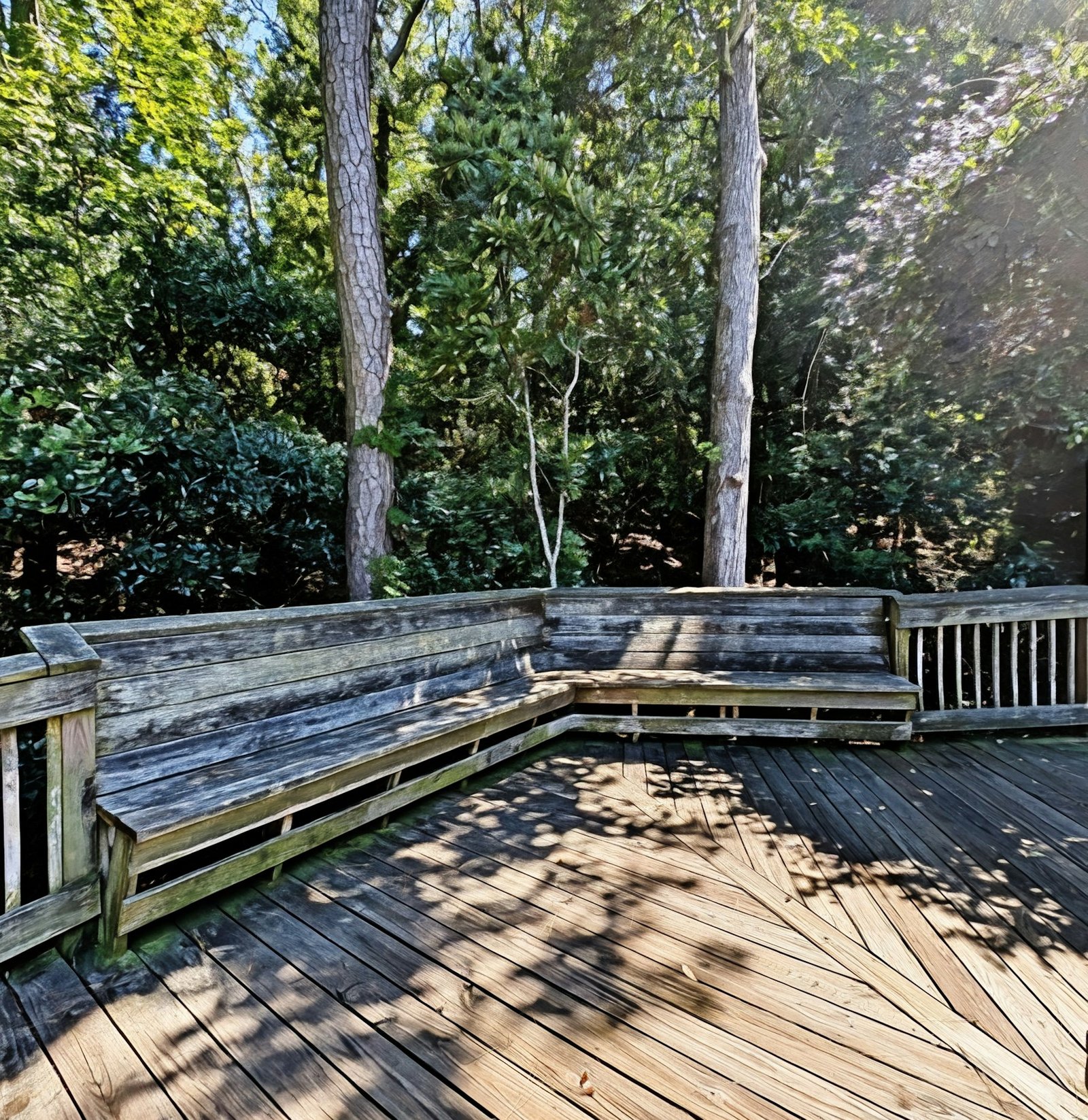
Dismantling rather than demolishing, so siding, gutters and landscaping come through it intact. All debris removed, including concrete from old footings that sit where new ones need to go.
Wall repair and flashing
The ledger line gets opened, checked and dried. Damaged sheathing or rim joist is replaced. New flashing is detailed so water sheds outward over the siding — the single most common thing the old deck got wrong.
A new deck to current code
Footings to depth, rated hardware throughout, guard height and baluster spacing as the inspector will measure them, and stairs with an even rise from top to bottom.
Process
How a replacement runs
The middle of this job is the only time your house wall is open, so it gets planned around the weather rather than around convenience.
Confirm it is past repair
We do not start here. If the frame can be saved economically we say so, and repair is a much smaller job. Replacement should be a conclusion, not an opening offer.
Design decisions
Same footprint, or bigger, or a different stair position. Materials. Whether a hot tub is ever going on it. This is the cheap moment for all of that.
Permit
A replacement is normally permitted work even when the footprint does not change, because the structure is new. Drawings prepared and submitted.
Demolition and wall inspection
Old deck down, wall opened at the ledger line, and an honest conversation if we find something behind it. This is where surprises live.
New footings and frame
Fresh holes to depth, inspected, poured. Then posts, beams, joists and blocking, spaced for whichever decking you chose.
Surface, guards and sign-off
Decking, guards, stairs, final inspection, and the site left clear. Then a walkthrough covering maintenance for the material you picked.
Worth doing now
The one moment when changing the shape is cheap
Almost every change that is expensive on an existing deck is nearly free during a replacement, because the frame is being built from nothing anyway.
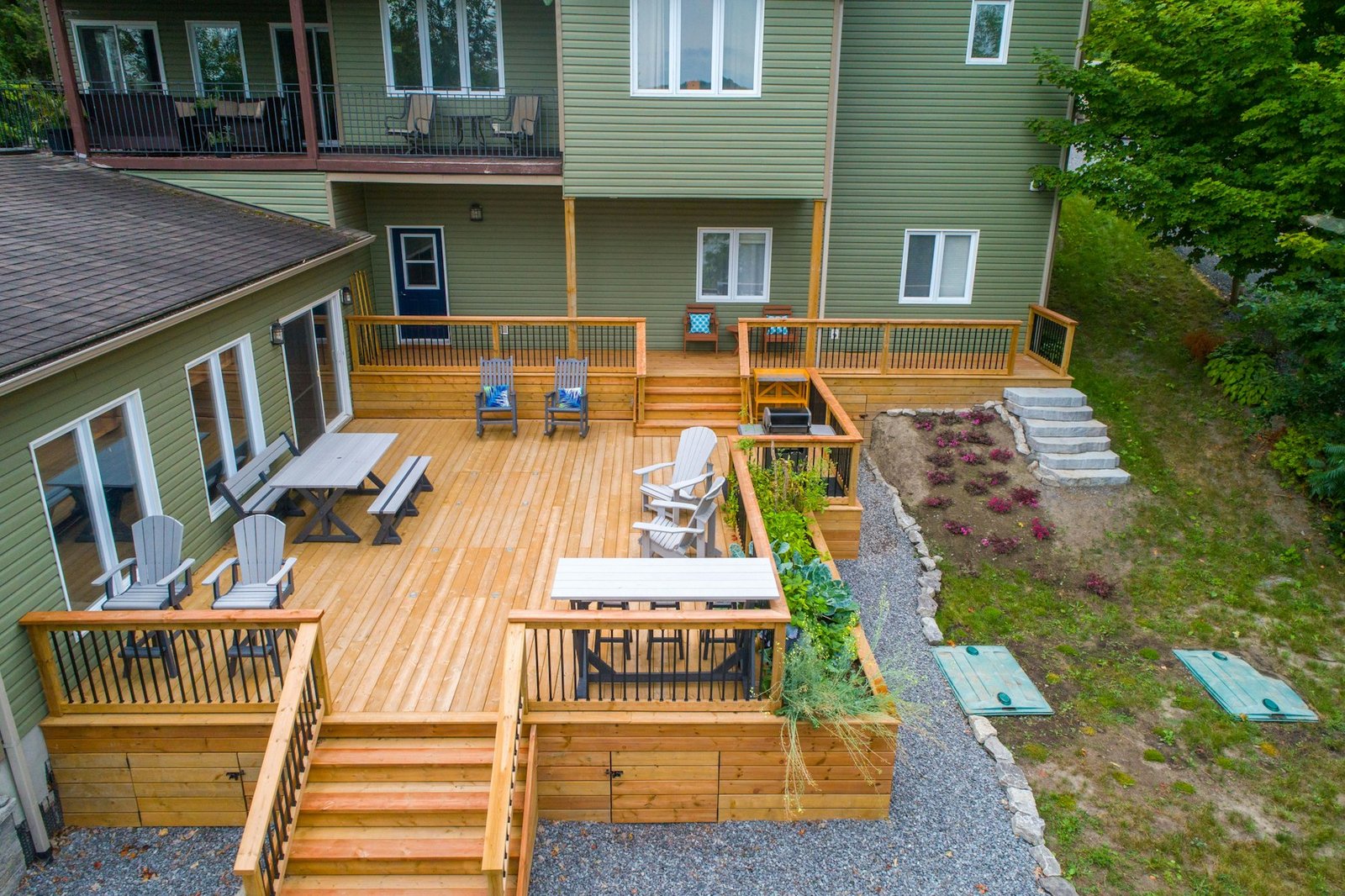
Extending the footprint by a few feet costs the extra materials and little else. Moving the stairs to the side where people actually walk costs nothing. Adding a lower tier onto a sloping lot is far cheaper now than as a later addition. And if a hot tub is anywhere in your plans, framing for it now is a fraction of retrofitting for it later.
The same is true of material. If you have been thinking about composite, this is the point where joist spacing can be set for it from the start.
- Extending the footprint, which at this stage is mostly just materials
- Moving the stairs to where the traffic actually goes
- Adding a second tier on a sloped Herriman or Draper lot
- Framing for a hot tub now rather than reinforcing for one later
- Switching to composite while joist spacing can still be set for it
Plan the cost
Resurface, rebuild, or start from the footings?
Three different jobs get called replacement and they are thousands apart. This prices each one on your deck, so you can see what keeping a sound frame is actually worth.
Not sure which side of the line you are on?
Most people asking about replacement are hoping to hear it can be repaired. Send photos and we will give you a straight answer either way.
Questions
Replacement questions
Can we reuse the existing footings?
Almost never, and it is a false economy on the rare occasions we can. Old footings are usually in the wrong place for a new frame, frequently shallower than current requirements, and there is no way to inspect what is under them. New holes are a small part of the total and they remove the one problem you cannot fix later.
How long is the house wall left open?
Hours, not days. The ledger line is opened, inspected and made weather-tight within the same working period. If a repair behind it needs longer, the opening is covered and sealed before we leave for the day.
Do we need a permit if the deck is the same size?
Normally yes. It is a new structure, and occupying the same footprint does not change that. Confirming it with your city is part of the job rather than something we leave to you.
Can it be done in stages to spread the cost?
Sometimes. Structure and decking have to happen together, but guards on a lower tier, skirting, a second set of stairs and a pergola can often be phased. What we will not do is leave a deck usable without a compliant guard on it.
Will the yard be a mess?
For a few days, yes. Demolition means a pile and footing holes mean spoil. We keep it in one place, board out any lawn machinery has to cross, and clear it fully at the end. We are not going to pretend it is tidy while it is happening.
Is replacing actually cheaper than a big repair?
Sometimes. Once a repair reaches roughly a third of the frame plus ledger and wall work, the two numbers converge — and at that point replacement buys a new structure with a full service life rather than an old one with a patch in it. We show you both figures.
Related work
Other things we do
If the frame turns out to be sound after all, this is usually where the conversation goes instead.
Deck Installation
New decks laid out, footed and framed for your lot — from post holes to the last board.
See what’s involvedDeck Repair
Targeted work on rot, springy boards, failing ledgers and rails that move when you lean on them.
See what’s involvedComposite Deck Installation
Capped composite and PVC surfaces on a frame spaced and flashed for the product.
See what’s involvedGet both numbers
Send the form with photos of the frame and the ledger. We will price the repair and the replacement so you can see the gap for yourself.
Request a Quote
Tell us about your deck project below, including rough size, materials and photos if you have them, and we will follow up to set up a free estimate.